

Why I Approached the Sign-Up Process Carefully
I rarely rush through account creation on casino platforms. Registration is not just a formality; it defines how much control I will have later over access, payments, and withdrawals. When I decided to create an account at Neospin Casino, I treated the Sign up section as a system to be evaluated, not a button to be clicked quickly.
From the outset, I wanted to see whether the registration flow respected user awareness or attempted to compress decisions into a single moment. In my experience, platforms that rush registration often introduce problems later—duplicate accounts, failed verifications, or confusion around country-specific rules.
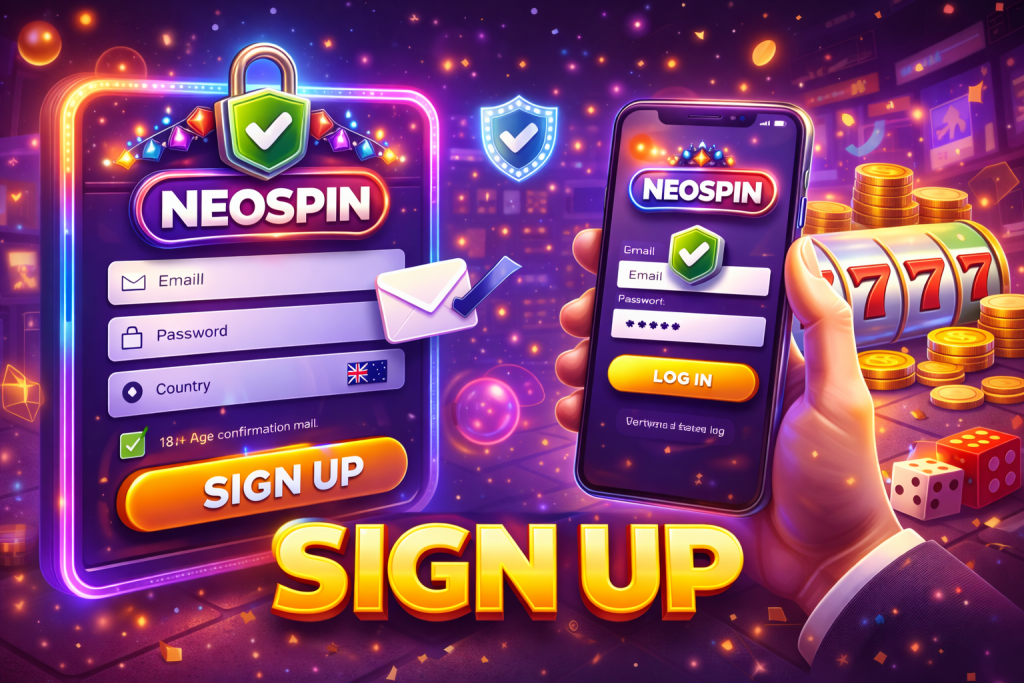
First Contact with the Registration Entry Point
The sign-up entry point was easy to locate and clearly separated from the login function. This separation matters more than it seems. When registration and login are merged visually, users often create unintended duplicate accounts. Here, the distinction was explicit.
Clicking the registration option opened a dedicated form without redirects or overlays. There was no attempt to combine registration with bonus activation or deposits at this stage, which immediately lowered pressure.
What the Registration Form Asked For—and What It Didn’t
The initial form requested only essential information:
- email address
- password
- country selection
- age confirmation (18+)
There were no requests for documents, payment details, or personal identification beyond what was necessary to create an account. From a user perspective, this felt proportional.
Importantly, the platform did not request address details or phone numbers during the first step. Those elements are often better handled later, when verification is actually required.
Email Verification as a Structural Step
After submitting the form, I was prompted to verify my email address. The verification email arrived quickly and contained a single confirmation action. There were no promotional messages embedded in the email.
I consider email verification an important structural safeguard. It reduces fake accounts, supports account recovery, and creates a clear ownership link before any financial activity occurs.
Until verification was completed, account access remained limited. This made sense. Full functionality should follow confirmation, not precede it.
Registration Without Forced Commitment
One of the strongest impressions I had was that registration did not imply obligation. Completing the form did not automatically:
- activate promotions
- redirect me to deposits
- launch gameplay
Instead, I was returned to a neutral account environment. That separation between “account creation” and “account usage” is often missing on casino platforms.
My Observations During Registration
| Step | What I Experienced | Why It Matters |
|---|---|---|
| Entry point | Clearly separated from login | Prevents duplicate accounts |
| Data requested | Minimal and relevant | Reduces friction |
| Email verification | Required before full access | Improves security |
| Promotional pressure | None during sign-up | Preserves user control |
| Post-registration flow | Neutral account access | No forced actions |
How the Sign-Up Flow Shaped My Behaviour
Because nothing pushed me forward, I slowed down. I reviewed settings instead of depositing. I logged out and returned later. That may sound insignificant, but behaviour is shaped by structure.
When registration feels rushed, users tend to make rushed decisions. Here, the system allowed me to stop at any point without penalty.
Early Assessment of the Registration Design
At this stage, I had not interacted with bonuses, games, or payments. I had simply created an account and observed how the platform behaved when no immediate action was taken.
Based on that alone, the sign-up flow appeared designed to establish a stable user identity first, rather than to maximise immediate engagement.
That approach reduces downstream issues—especially for users accessing the platform from Australia, where clarity around jurisdiction and account ownership matters.
First Login After Registration: What Actually Happens
After completing registration and confirming my email, I didn’t rush forward. I logged out deliberately and returned later to test the Login process as a separate experience. This distinction matters: many platforms treat registration and login as a single flow, but users don’t.
I wanted to see whether the system remembered context, handled authentication cleanly, and respected session boundaries.
Returning to the Platform
The login interface loaded instantly and recognised my country settings without asking again. There were no CAPTCHA interruptions or secondary confirmations beyond standard credentials. From a usability perspective, this indicated that email verification had already established trust.
I entered my credentials and gained access without delays. No banners, no pop-ups, no forced redirection to deposits. The platform landed me inside the account dashboard.
The Account Dashboard: Orientation Before Action
The first screen after login was informational rather than promotional. I saw:
- current balance (zero)
- account status
- navigation menu
- settings access
There were no flashing calls to action. This gave me time to orient myself and understand where things were before engaging further.
Crucially, nothing was blocked. I could move freely through menus without being prompted to deposit or activate offers.
Session Stability and Logout Behaviour
I tested session behaviour by opening multiple tabs, refreshing the page, and logging out manually. Each action behaved predictably. After logout, returning to restricted pages redirected me back to login instead of throwing errors.
That may sound basic, but unreliable session handling is a common technical weakness in online casinos.
My Post-Login Observations
| Area | Behaviour Observed | Impact on User Experience |
|---|---|---|
| Authentication | Immediate access | Reduces friction |
| Dashboard layout | Informational, neutral | Encourages exploration |
| Forced actions | None | Maintains user control |
| Session handling | Stable across tabs | Improves reliability |
| Logout flow | Clean redirect | Prevents access confusion |
Typical User Paths After Login
Why This Login Experience Matters
The first login sets expectations. If a platform immediately pressures users, trust erodes. Here, the login stage acted as a checkpoint rather than a funnel.
From my perspective, this design supports deliberate decision-making. I could inspect menus, read terms, and adjust settings without interruption.
That restraint is intentional—and rare.
First Decisions After Sign Up: Bonuses, Choices, and Control
After spending some time inside the account area, I reached the point every new user eventually faces: deciding whether to engage with a promotion and how to proceed next. This is where many platforms shift tone—from neutral onboarding to aggressive monetisation.
Neospin’s approach felt noticeably more measured.
Encountering the Bonus Section
I navigated to the Bonus section deliberately rather than being pushed there. The page presented available offers clearly, with headline values, wagering requirements, and validity periods visible upfront. Importantly, nothing auto-activated.
That distinction matters. Bonuses that trigger automatically often create confusion later, especially around wagering obligations. Here, activation required an explicit decision.
I spent time reading the terms instead of rushing. The structure allowed that. No countdown timers, no flashing urgency messages, no pressure language.
Evaluating Whether to Activate a Bonus
From a user perspective, this stage is about control. I asked myself:
- Do I want to play with conditions attached?
- Am I comfortable with the wagering multiplier?
- Does the bonus fit my intended session length?
Because nothing was forced, opting in felt like a choice rather than a trap.
I also noticed that the platform did not block gameplay or navigation if I chose not to activate anything. That reinforced the idea that bonuses are optional tools, not prerequisites.
My Assessment of the Bonus Entry Point
| Factor | What I Observed | Why It Matters |
|---|---|---|
| Bonus visibility | Clear, structured | Reduces misunderstanding |
| Activation method | Manual opt-in | Preserves user control |
| Terms access | Immediately visible | Supports informed choice |
| Pressure elements | None detected | Lowers impulsive behaviour |
| Play without bonus | Fully available | Encourages autonomy |
Player Behaviour After Bonus Review
What stood out most during this phase was pacing. Neospin allowed me to move at my own speed. I didn’t feel rushed into a financial commitment, and I didn’t feel penalised for hesitating.
From an onboarding perspective, that signals confidence. Platforms that rely on pressure usually do so because they fear disengagement. Here, the assumption seemed to be that informed users will stay longer.
By the end of this stage, I had not yet deposited—but I understood the system well enough to feel comfortable doing so later.
Mobile Continuity, First Play Readiness, and Final Assessment
After completing the onboarding flow and spending time reviewing options, I shifted to mobile. I did this not for convenience, but to test whether the sign-up logic and control I experienced on desktop carried over to the smaller screen. Many platforms simplify too aggressively on mobile, which often removes context and increases impulsive actions.
Mobile Access Without Loss of Structure
Using the App-style mobile interface, I found the same account overview, the same navigation depth, and the same absence of forced prompts. Nothing essential was hidden behind icons, and no steps were skipped. Account settings, limits, and navigation remained accessible without extra taps.
This continuity matters. When mobile compresses structure, users lose awareness. Here, structure stayed intact.
Preparing for First Play—On My Terms
Before playing, I reviewed game categories rather than jumping in. Browsing Slots felt like browsing a catalogue, not a funnel. Titles were grouped logically, with no auto-launching previews or countdowns.
I then explored the broader Games area. Categories were clearly separated, and contribution rules (where applicable) were visible before any wager. That allowed me to decide if and how to play without trial-and-error.
The Ability to Stop—Anywhere, Anytime
One of the most important moments came when I simply chose to stop. Logging out was immediate. Closing the app did not resume anything later. Returning hours afterward brought me back to the account overview, not to an active game.
That design choice reduces habit formation and supports deliberate engagement.
Final Sign-Up Experience Summary
| Stage | What I Experienced | Outcome |
|---|---|---|
| Registration | Minimal data, clear steps | Low friction |
| Verification | Email-first, fast | Secure access |
| First account view | Informational, neutral | Orientation before action |
| Mobile transition | Full feature parity | Consistent control |
| First play readiness | Optional, self-directed | Reduced pressure |
| Exit & return | Clean, predictable | User autonomy |
Final Reflection from a User Perspective
Looking back across all four parts, the sign-up experience did not feel like a sales funnel. It felt like account creation—plain and intentional. At no point was I rushed into decisions or penalised for hesitation.
That restraint shaped my behaviour. I browsed more. I played later. I stopped easily.
For users who value clarity and control during onboarding, this approach makes sense. The system establishes identity first, context second, and action last.
From my perspective, that sequence builds confidence—not by promising outcomes, but by respecting boundaries.